
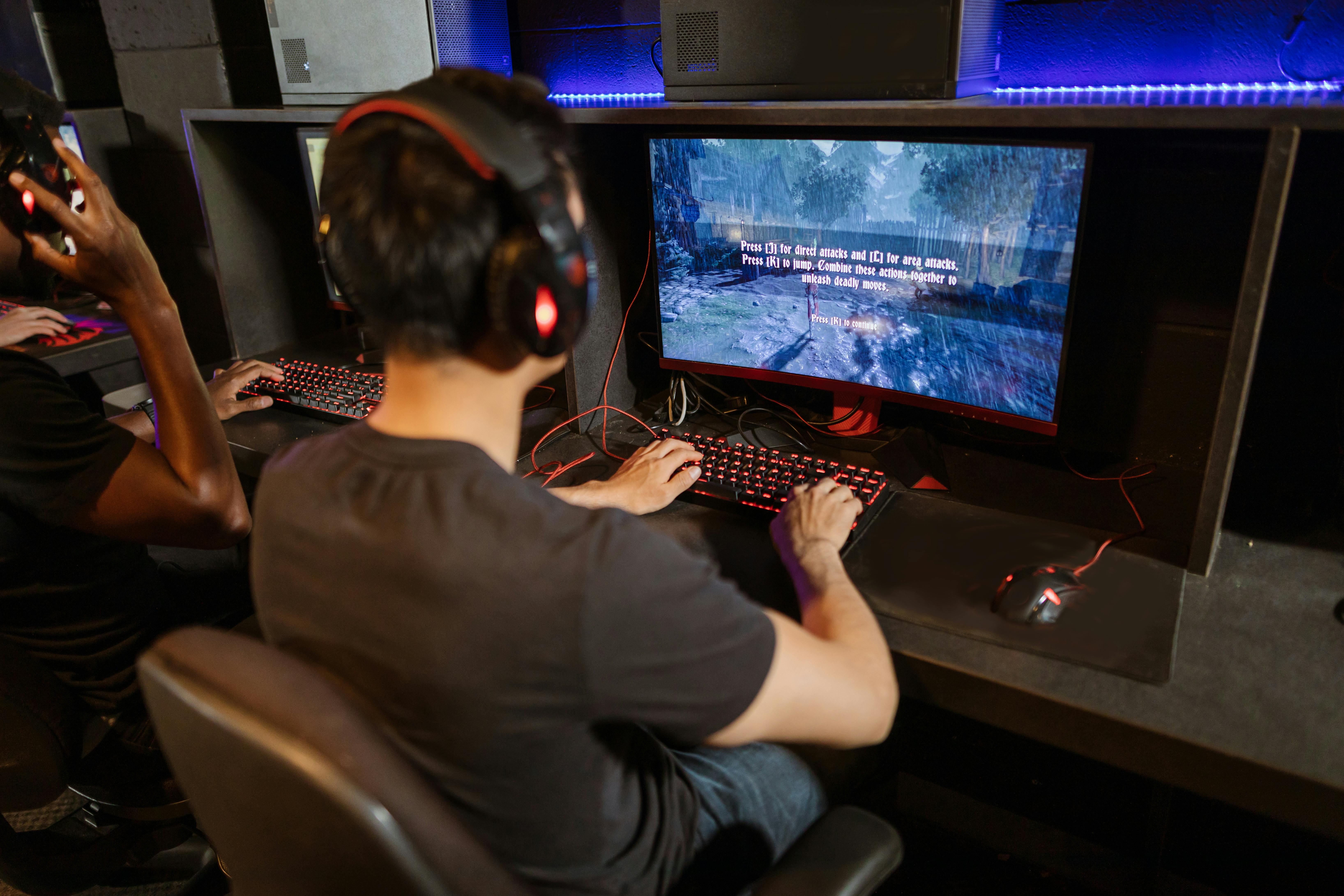
Dive into the revolutionary world of cloud gaming in 2026! Discover how game streaming services like Xbox Cloud Gaming, GeForce NOW, PlayStation Plus Premium, and Amazon Luna are transforming how you play, offering high-fidelity experiences without expensive hardware. Compare subscriptions, performance, and game libraries to find your ultimate gaming future and make a smart purchasing decision.
Introduction to the Topic
Welcome to 2026, where the future of gaming isn't just knocking; it's fully integrated into our lives. Forget the days of agonizing over expensive hardware upgrades, massive game downloads, or platform exclusivity limiting your choices. The era of cloud gaming has arrived in full force, promising a seamless, high-performance experience directly to almost any device you own. This isn't a niche technology anymore; it's a vibrant, competitive landscape where major tech giants are vying for your subscription dollars, offering unparalleled access to vast game libraries and cutting-edge graphics without the need for a dedicated gaming rig.
For years, the dream of streaming games like movies seemed perpetually just out of reach. Latency issues, network bottlenecks, and the sheer computational power required made it feel like science fiction. But thanks to incredible advancements in network infrastructure, server technology, and compression algorithms, that dream is now a tangible reality. In this comprehensive guide, we'll cut through the hype to bring you an in-depth comparison of the top cloud gaming services available today. Whether you're a casual player looking for convenience, a hardcore gamer seeking the best performance, or a budget-conscious enthusiast, we'll help you navigate the options, compare the value, and ultimately decide which cloud gaming subscription offers the best return on your investment.
Backgrounds & Facts
The journey to mainstream cloud gaming has been paved with both innovation and significant challenges. Early attempts, like OnLive and Gaikai, laid crucial groundwork but were ultimately ahead of their time, limited by internet speeds and costly infrastructure. Even more recently, Google Stadia's ambitious entry and subsequent exit served as a stark lesson: excellent technology isn't enough; a compelling business model, robust game library, and clear value proposition are paramount.
Fast forward to 2026, and the landscape is dramatically different. The widespread adoption of 5G networks, the rollout of ultra-fast fiber optic broadband across urban and suburban areas, and the impending arrival of Wi-Fi 7 have collectively shattered the primary barrier to entry: internet latency. Server-side processing power has also exploded, with custom hardware and advanced GPUs now capable of rendering complex game worlds in 4K resolution at high frame rates, then compressing and streaming them in milliseconds. This technological maturity has allowed services like Xbox Cloud Gaming, NVIDIA GeForce NOW, PlayStation Plus Premium, and Amazon Luna to flourish, each carving out distinct niches.
The market for cloud gaming is projected to reach unprecedented heights by the end of the decade, with analysts citing a compound annual growth rate (CAGR) exceeding 25%. This growth is fueled by several factors: the rising cost of console and PC gaming hardware, the increasing size of game installations making local storage a constant battle, and the desire for frictionless entertainment on a multitude of devices – from smart TVs and smartphones to tablets and low-spec laptops. Cloud gaming isn't just about playing games; it's about redefining accessibility, democratizing high-end experiences, and freeing gamers from the constraints of hardware cycles. It represents a paradigm shift from game ownership to game access, a model that is increasingly appealing to modern consumers.
Expert Opinion / Analysis
“Cloud gaming in 2026 isn't a future possibility; it's the present reality, fundamentally reshaping how we interact with interactive entertainment,” states Dr. Anya Sharma, Lead Gaming Analyst at Nexus Insights. “The industry has learned crucial lessons from past ventures, focusing now on sustainable ecosystems, diverse content libraries, and robust performance. We're witnessing a strategic chess game between tech giants, each leveraging their unique strengths to capture market share.”
Dr. Sharma emphasizes that the key differentiator among services today isn't just raw technical capability, which has largely converged to a high standard, but rather their strategic approach to content and platform integration. “Microsoft, with Xbox Cloud Gaming, is banking on the sheer value of Game Pass Ultimate – a 'Netflix for games' model that integrates seamlessly across console, PC, and mobile. It’s about ecosystem lock-in and subscriber volume,” she explains. “NVIDIA's GeForce NOW, on the other hand, champions the 'bring your own games' philosophy, appealing to PC gamers who already own a library on Steam, Epic Games Store, or GOG. Their focus is on delivering raw, uncompromised PC performance, even offering ray tracing capabilities in the cloud.”
Sony's PlayStation Plus Premium, according to Dr. Sharma, leverages its powerful first-party exclusive catalog and extensive back catalog of PS1, PS2, PS3, and PS4 titles. “It's a strong proposition for PlayStation loyalists, offering a nostalgic journey alongside current-gen streaming,” she notes. “Amazon Luna, while perhaps less performance-driven, focuses on accessibility and a channel-based subscription model that integrates with their Prime ecosystem, appealing to a broader, more casual audience.”
The expert consensus is clear: cloud gaming is no longer a niche, but a significant segment of the gaming market. Its impact extends beyond consumer convenience, influencing game development (optimizing for streaming), hardware manufacturing (less reliance on high-end local GPUs), and even internet infrastructure investment. The battle for your gaming dollar will increasingly be fought in the cloud, making understanding these services more critical than ever.
💰 Best Options in Comparison (VERY IMPORTANT)
Choosing the best cloud gaming service in 2026 depends entirely on your priorities: game library, performance, device compatibility, and budget. Here’s a breakdown of the leading contenders:
-
Xbox Cloud Gaming (part of Game Pass Ultimate)
Best For: Gamers seeking incredible value, a vast and constantly updated library, and seamless integration across Xbox consoles, PC, and mobile devices. If you love Microsoft's first-party titles and a wide array of third-party games, this is a no-brainer.
Key Features: Access to hundreds of high-quality games, including all Xbox Game Studios titles on day one. Playable on Android, iOS, Windows PCs, Xbox consoles, and smart TVs (select models). Offers touch controls for many mobile games and supports most Bluetooth controllers. Resolution generally capped at 1080p/60fps, but quality is consistently good.
-
NVIDIA GeForce NOW
Best For: PC gamers who already own a substantial library of games on platforms like Steam, Epic Games Store, and GOG, and demand the absolute highest streaming performance, including 4K resolution and ray tracing.
Key Features: Streams your *existing* PC games from powerful NVIDIA servers (up to RTX 4080-equivalent performance for Ultimate tier). Supports 4K resolution at 120fps, ultra-low latency, and full ray tracing capabilities. Available on PC, Mac, Android, iOS, NVIDIA SHIELD TV, and select smart TVs. Multiple tiers available, from a free basic option to a premium Ultimate subscription.
-
PlayStation Plus Premium
Best For: PlayStation loyalists, those who want to stream classic PlayStation games (PS1, PS2, PS3, PS4), and PC users looking to access select PS5 titles without owning the console. Offers a unique blend of nostalgia and current-gen access.
Key Features: Streams a curated selection of PS4 and PS5 games, plus a vast catalog of classic PlayStation titles. Also includes game trials and cloud saves. Primarily available on PS4, PS5, and PC. Max resolution typically 1080p/60fps for streamed games. The library is robust but more curated than Xbox Game Pass.
-
Amazon Luna
Best For: Casual gamers, Amazon Prime subscribers, and families looking for an accessible, channel-based approach to gaming with a focus on ease of use and broad device compatibility.
Key Features: Unique channel-based subscription model (e.g., Luna+, Ubisoft+). Prime members get access to a rotating selection of free games. Works across Fire TV, PC, Mac, Android, iOS, and Samsung smart TVs. Offers a dedicated Luna Controller for optimized latency. Generally streams at 1080p/60fps, with a focus on stability over bleeding-edge graphics.
To help you compare, here's a detailed table:
| Service | Pricing Model (2026 est.) | Key Game Library / Access | Max Resolution/FPS | Device Compatibility | Unique Features | Best For |
|---|---|---|---|---|---|---|
| Xbox Cloud Gaming | Game Pass Ultimate (approx. $16.99/month) | Hundreds of Game Pass titles, all Xbox exclusives day one | 1080p/60fps (consistent) | Xbox consoles, PC, Android, iOS, Smart TVs | Deep Xbox ecosystem integration, touch controls, Quick Resume | Value-seekers, Xbox fans, mobile gamers |
| NVIDIA GeForce NOW | Free, Priority ($9.99/month), Ultimate ($19.99/month) | Your existing PC game library (Steam, Epic, GOG) | 4K/120fps (Ultimate), Ray Tracing | PC, Mac, Android, iOS, SHIELD TV, Smart TVs | RTX 4080-class performance, ultra-low latency, BYO games | Hardcore PC gamers, performance enthusiasts |
| PlayStation Plus Premium | Premium (approx. $17.99/month) | Curated PS4/PS5 games, extensive classic PS library | 1080p/60fps (varied) | PS4, PS5, PC | PlayStation exclusives, classic game streaming, game trials | PlayStation fans, retro gamers |
| Amazon Luna | Luna+ (approx. $9.99/month), Ubisoft+ ($17.99/month), Prime rotating games | Channel-based, rotating Prime games, Ubisoft+ library | 1080p/60fps (stable) | Fire TV, PC, Mac, Android, iOS, Samsung Smart TVs | Prime integration, family-friendly, dedicated Luna Controller | Casual gamers, Amazon Prime members, families |
Outlook & Trends
The future of cloud gaming in 2026 and beyond looks incredibly dynamic. We're on the cusp of several major advancements that will further solidify its position as a dominant force in entertainment. Firstly, the ongoing global rollout of Wi-Fi 7 and even faster broadband technologies will dramatically reduce latency and increase bandwidth, making 8K cloud gaming a viable reality for a broader audience. This will push the boundaries of visual fidelity, making local hardware even less relevant for high-end experiences.
Secondly, expect deeper integration of cloud gaming into smart home ecosystems. Imagine booting up a game directly from your smart TV's home screen, controlled by your voice assistant, or even playing a quick session on your smart fridge. Major TV manufacturers are already partnering with cloud gaming providers, and this trend will only accelerate. The lines between gaming device, smart device, and entertainment hub will continue to blur.
Thirdly, the 'Netflix for Games' model, championed by Xbox Game Pass, is likely to see further evolution and competition. We might see more platform holders or even independent publishers offering their own cloud-enabled subscription channels, intensifying the battle for content. There's also growing speculation about cloud gaming's role in the metaverse, enabling complex, persistent virtual worlds to be streamed to lightweight VR/AR headsets, bypassing the need for powerful onboard processing. This could unlock truly immersive, shared experiences for the masses.
Finally, the environmental impact of cloud gaming is an increasingly important factor. By centralizing hardware and optimizing energy usage in data centers, cloud gaming has the potential to significantly reduce the electronic waste associated with individual console and PC upgrades. As consumers become more environmentally conscious, this aspect could become a compelling selling point for cloud services, contributing to a more sustainable gaming future.
Conclusion
In 2026, cloud gaming isn't just a novelty; it's a mature, competitive, and incredibly compelling option for gamers of all stripes. The days of being tethered to expensive hardware are rapidly fading, replaced by the freedom and flexibility of game streaming. Whether you prioritize a vast, constantly updated library like Xbox Cloud Gaming, the raw performance and 'bring your own games' model of NVIDIA GeForce NOW, the nostalgic depth and exclusives of PlayStation Plus Premium, or the accessible, family-friendly channels of Amazon Luna, there's a cloud service perfectly tailored to your needs.
The decision to invest in a cloud gaming subscription is no longer a leap of faith but a strategic choice for your entertainment future. With unparalleled convenience, access to cutting-edge graphics, and the potential for significant savings on hardware, cloud gaming represents a pivotal shift in how we play. We encourage you to evaluate your own gaming habits, internet speed, and desired game library, then take advantage of free trials or entry-level tiers to experience the revolution firsthand. The future of gaming is here, and it’s waiting for you in the cloud – ready to deliver endless hours of high-quality entertainment directly to your fingertips.