
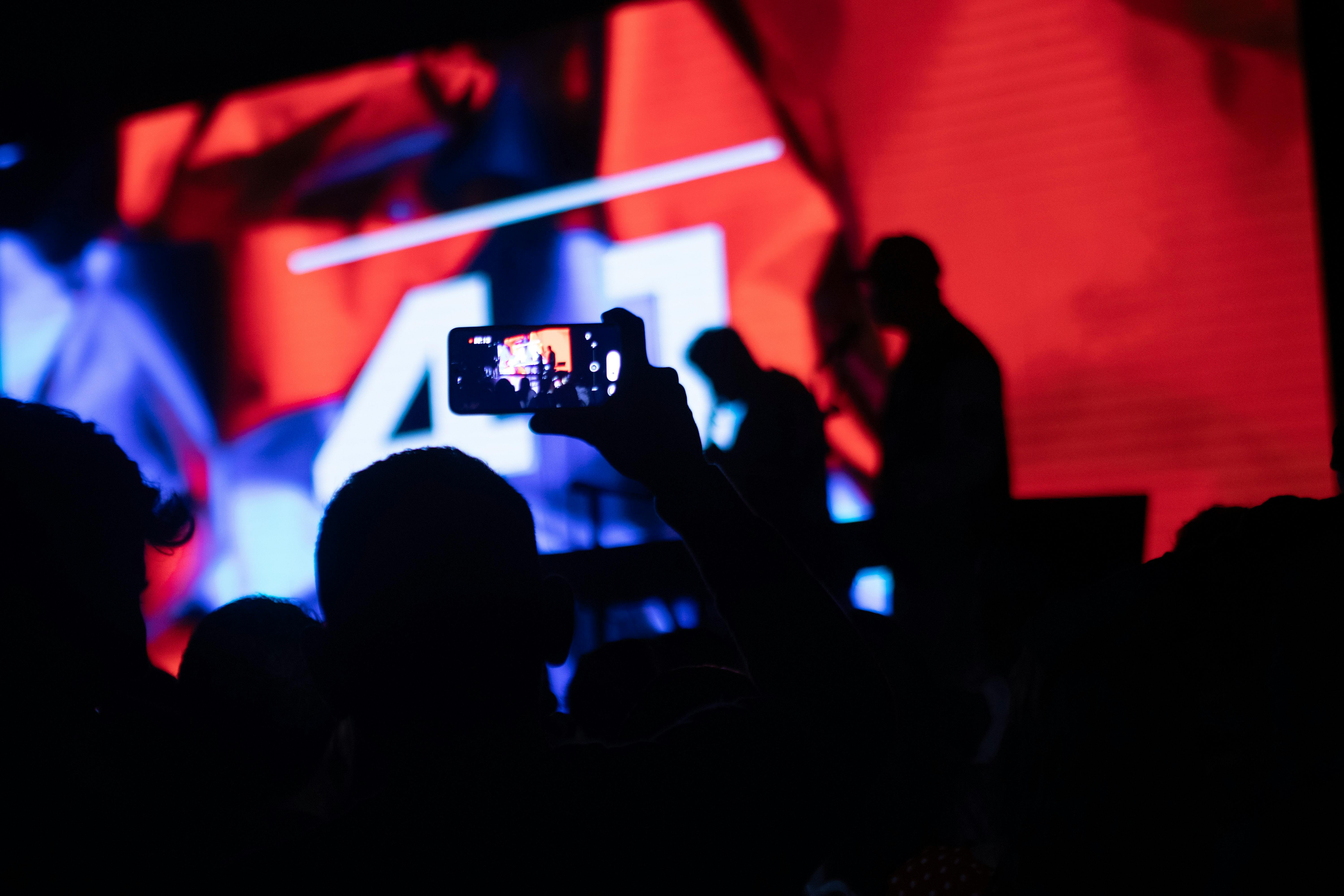
A live album rarely documents one evening as it happened. It is a constructed object built from multiple performances and finished with tools the audience in the room never encountered.
The recording is not what the room heard
Live recordings are taken from a separate multitrack feed in which every instrument and microphone is captured on its own channel.
What an audience hears is a single mix optimised for a large space, shaped by the venue's acoustics and by where a listener happens to be standing.
The album is mixed afterwards from the isolated feeds, so it can be balanced in ways that were physically impossible in the building.
Several nights become one performance
Tours record many shows, which gives the producer a choice of takes for each song rather than a single fixed version.
The finished sequence is often assembled from different nights, joined so that the transitions read as continuous even though they were never played that way.
Crowd noise is used to hide the seams, which is why applause on live records tends to be consistent from track to track.
Repairs happen quietly afterwards
Vocals that drifted, a missed entry or a broken string are commonly corrected in a studio before release, using overdubs cut against the live backing.
The extent varies enormously between artists, and some make a point of releasing performances untouched, but the option exists on every project.
Because the corrections are made in isolation and mixed back in, they are difficult to detect without access to the original tracks.
Audience sound is an engineering decision
Crowd microphones are placed deliberately and mixed at a chosen level, which determines how present the audience feels on the finished record.
Too little and the album sounds like a studio take; too much and the music sits behind the noise, so the balance is set to a target rather than to reality.
The apparent size of the crowd on a live album is therefore a mixing choice as much as a fact about the venue.
The goal is the memory, not the event
Producers generally aim to reproduce how a good night felt rather than how it measured, because a literal document often disappoints the people who were there.
Attention in a room fills in gaps that a recording exposes, and volume and physical presence carry excitement that flat playback cannot.
The result is a version tightened, balanced and cleaned until it matches the impression the audience left with, which is why it rarely matches a phone recording of the same show.